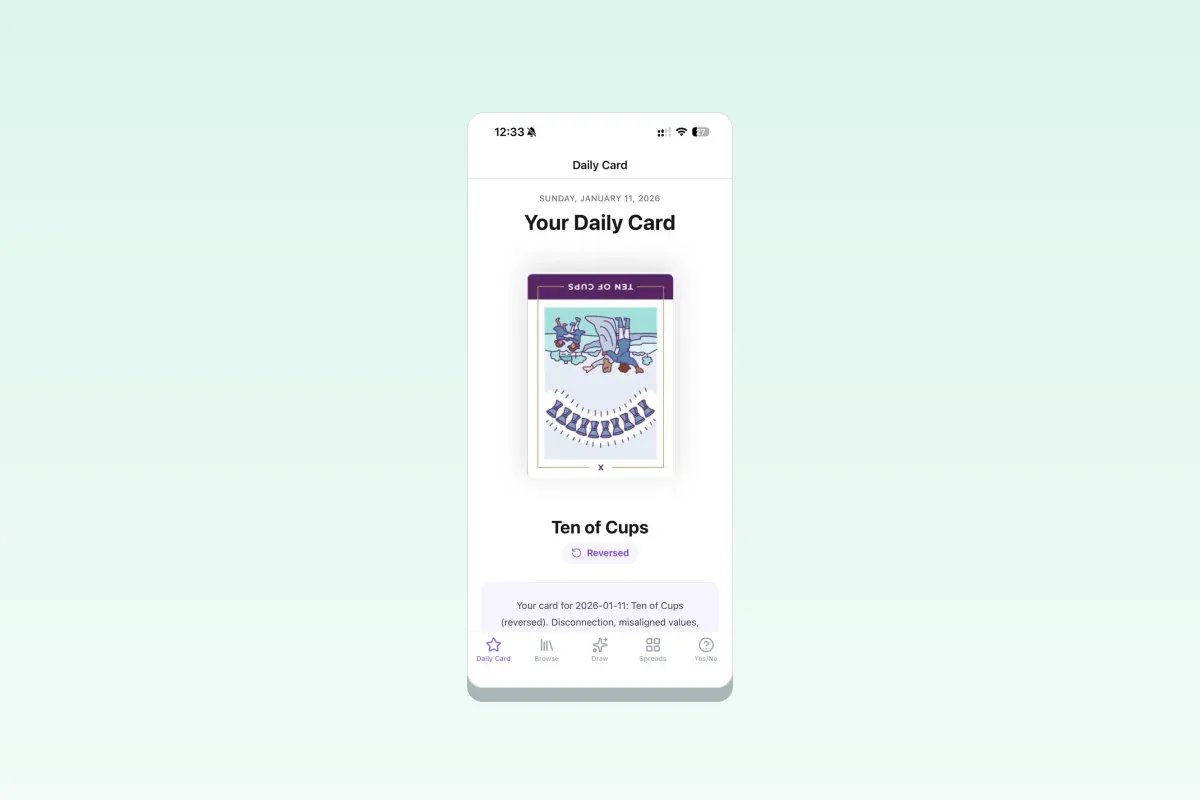



Open-source React Native (Expo) template for a tarot reading app: daily card, three-card spread, Celtic Cross, yes / no divination, and the full 78-card Rider-Waite-Smith deck. Built on the Roxy Tarot API and the official @roxyapi/sdk. One API key, every tarot endpoint, full control over your native UI.
Fork it, set one environment variable, and ship.
Screenshots
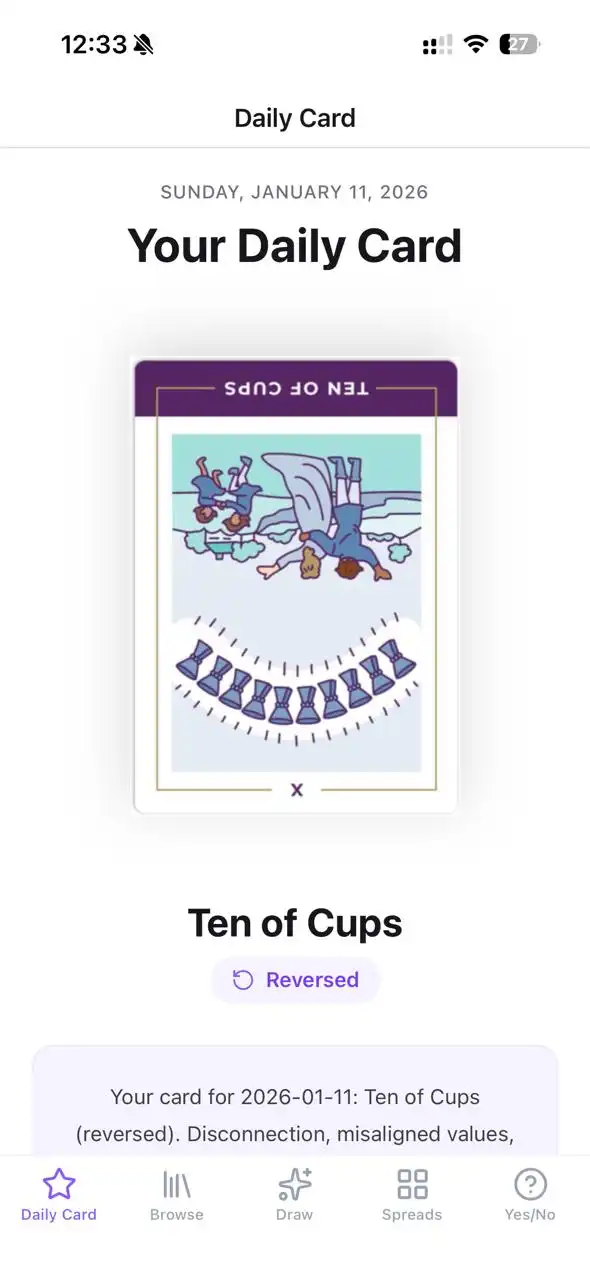
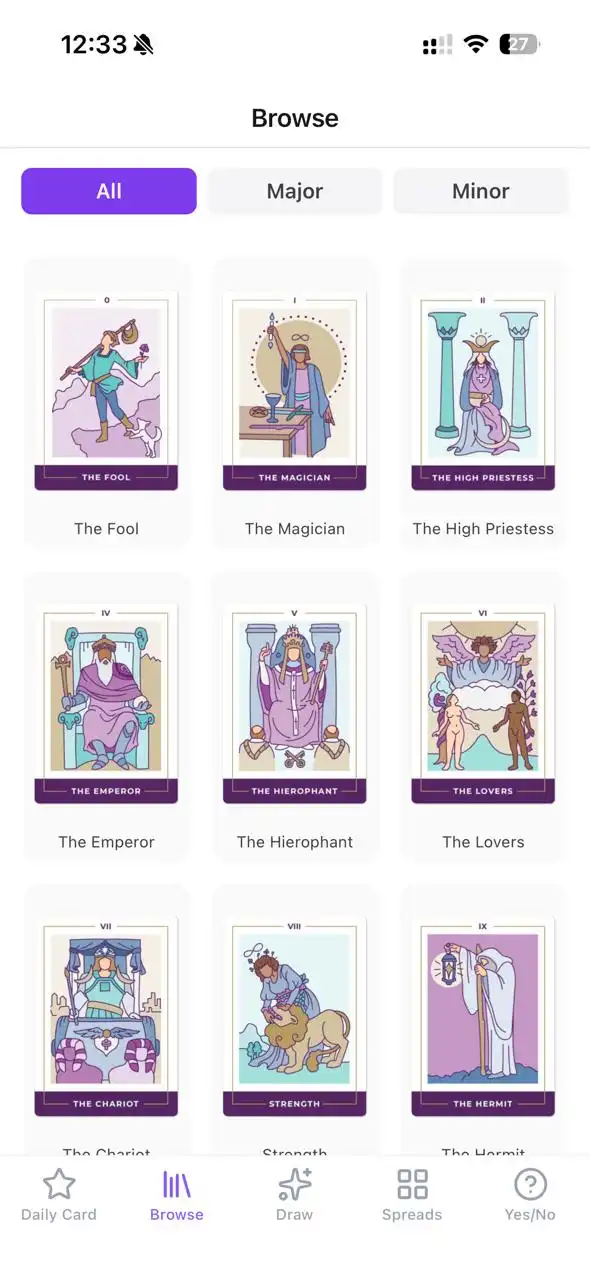
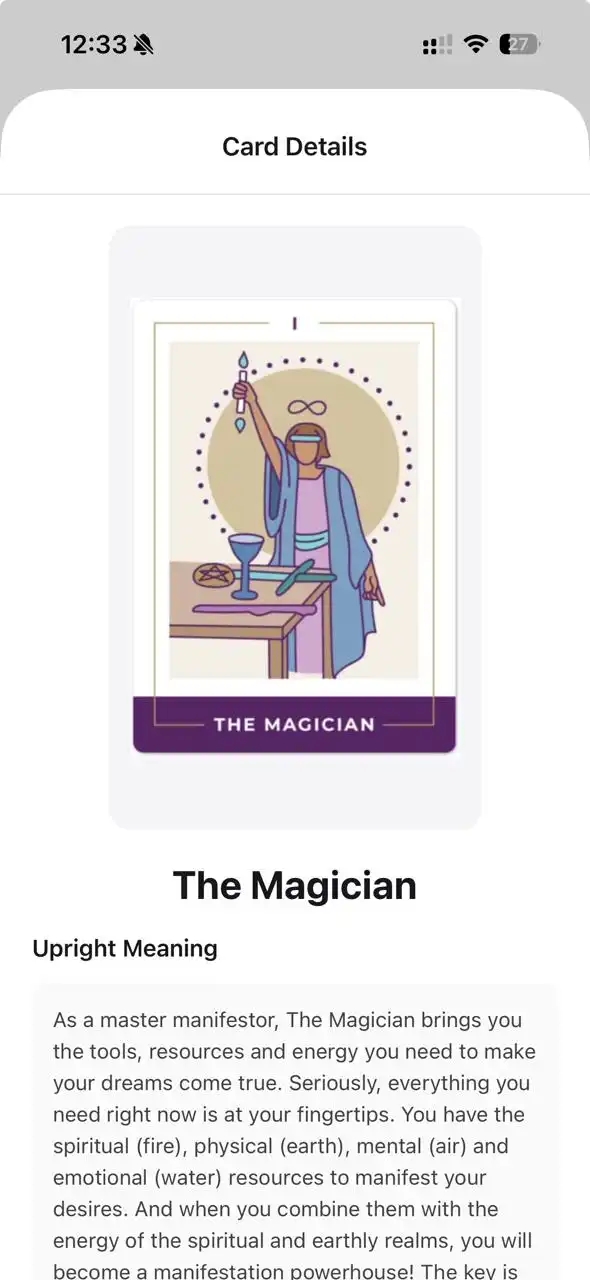
Light Mode
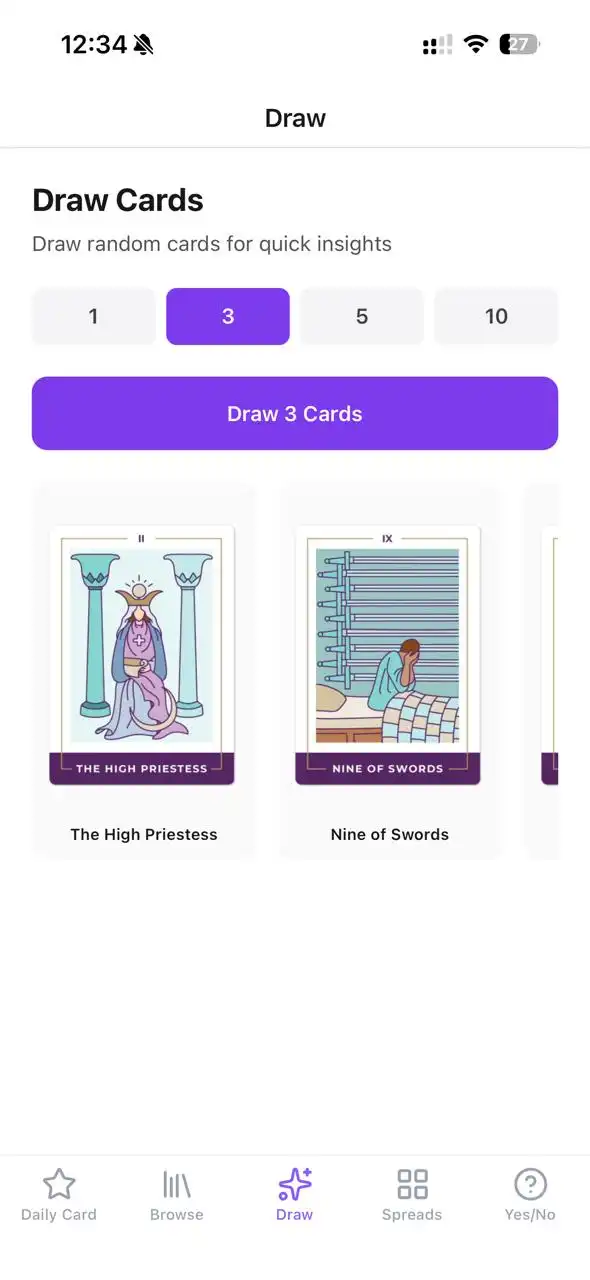
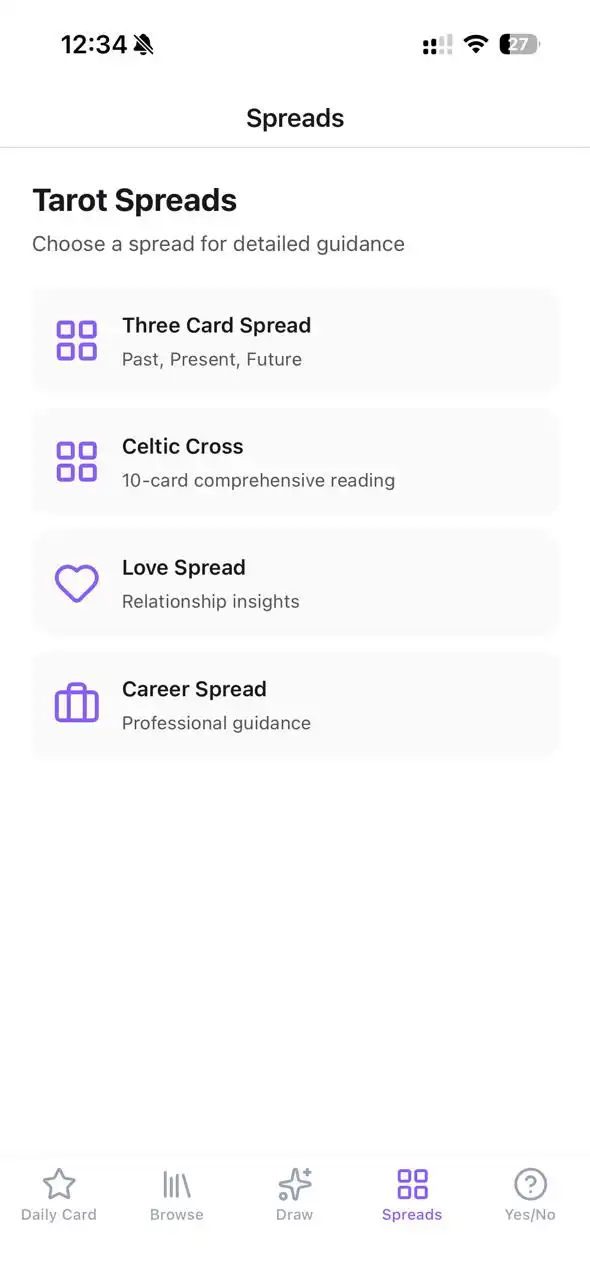
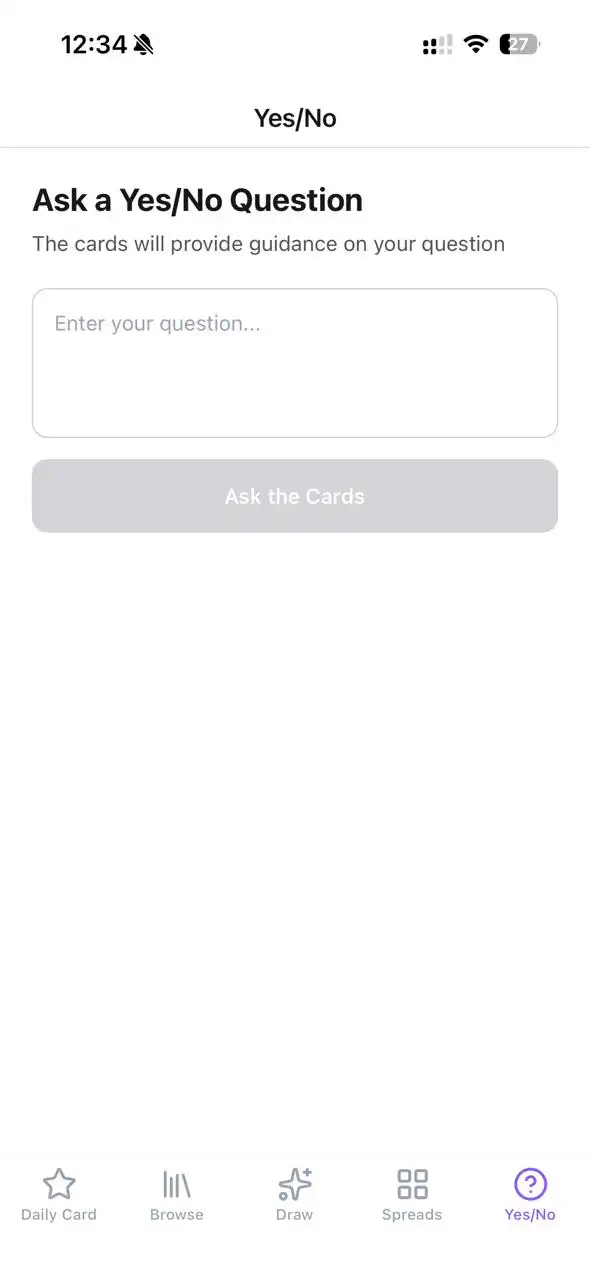
Dark Mode
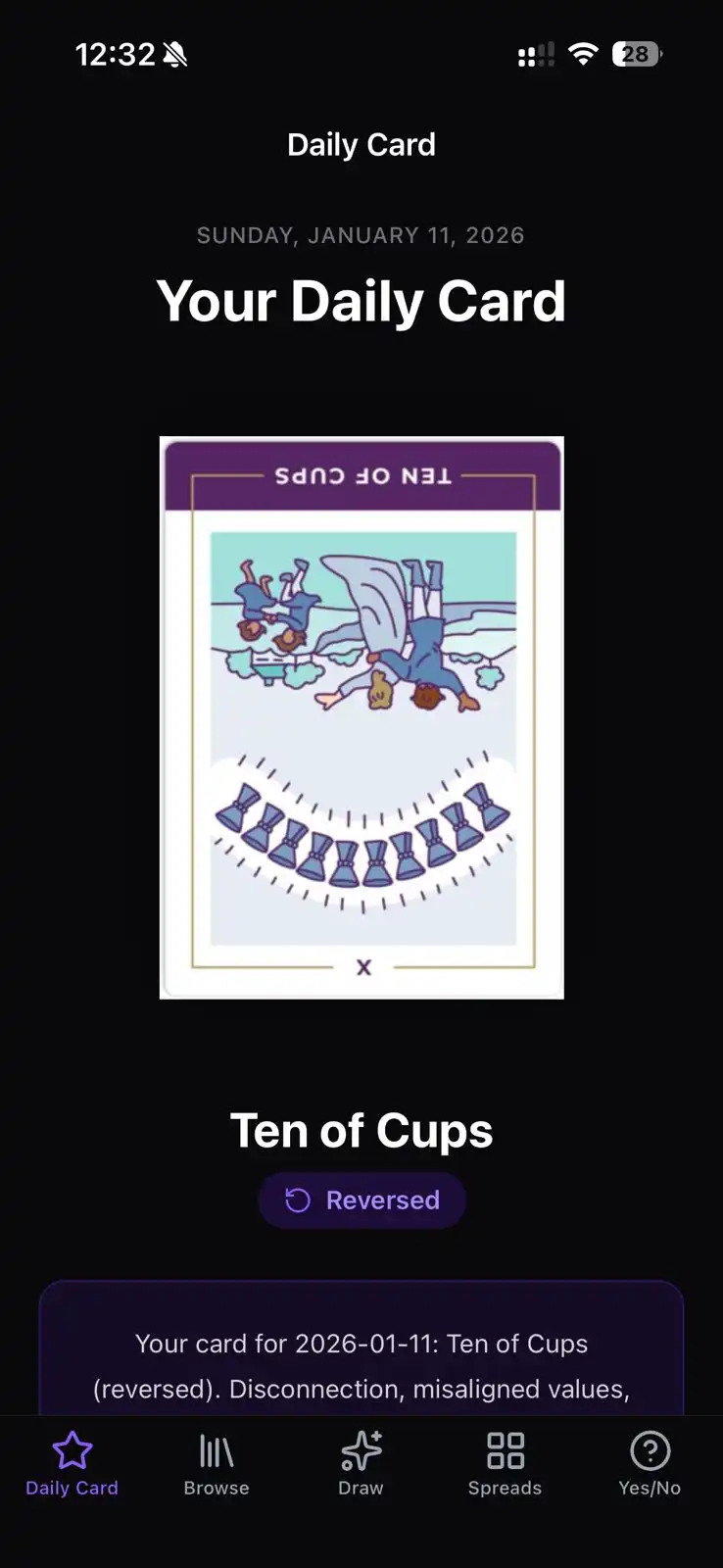
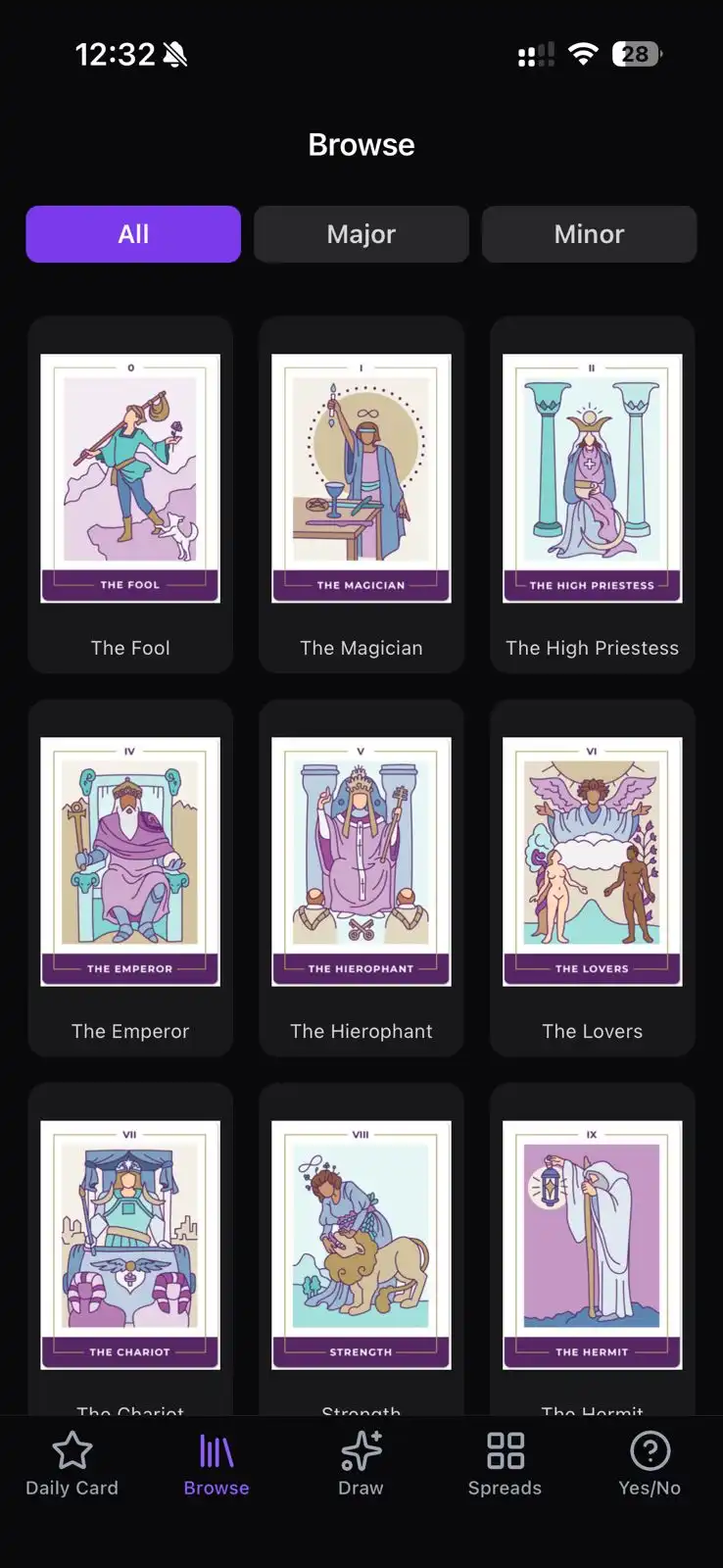
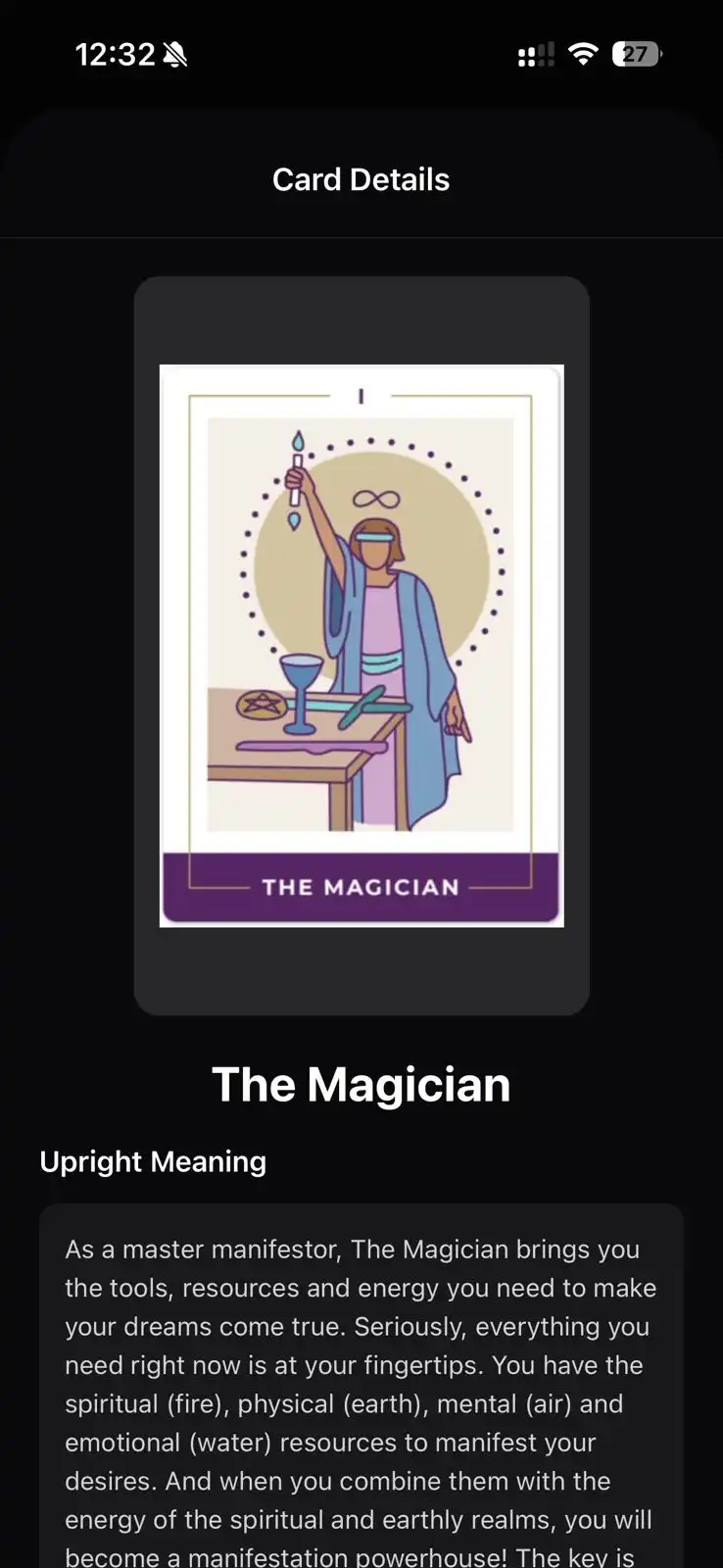
What you get
- Daily card seeded per device, so a user sees the same card all day, with upright or reversed meaning and full artwork.
- Browse all 78 cards filtered by Major Arcana, Minor Arcana, and suit (Cups, Wands, Swords, Pentacles).
- Quick draw of 1 to 10 random cards with position and reversal state.
- Spreads: Three-Card (Past, Present, Future), Celtic Cross (ten positions), Love, and Career, each with position-specific interpretations and a summary.
- Yes / No divination with a Strong or Qualified strength and a contextual reading.
- Card detail with the complete upright and reversed interpretation for every card.
- Dark mode with a violet theme that follows the device setting.
Stack
| Technology | Purpose |
|---|---|
| Expo SDK 57 | React Native runtime and build tooling |
| Expo Router | File-based navigation with bottom tabs |
| @roxyapi/sdk | Fully typed RoxyAPI client. One key, every domain. |
| NativeWind v4 | Tailwind CSS for React Native |
| Expo Image | Cached card artwork |
| Roxy Tarot API | 78-card Rider-Waite-Smith deck, spreads, and divination |
Quick start
1. Clone and install
git clone https://github.com/RoxyAPI/tarot-starter-app.git
cd tarot-starter-app
npm install
2. Get your API key
Get instant access at roxyapi.com/pricing. One key unlocks every tarot endpoint. Add it to .env:
EXPO_PUBLIC_ROXYAPI_KEY=your-api-key-hereBundled key caveat. A mobile app has no server, so any
EXPO_PUBLIC_*value is compiled into the build and can be read off a device. For production, use a key restricted to your bundle id in the dashboard, or route calls through a thin backend proxy that holds the real key. Never ship an unrestricted key.
3. Run
npm start          # dev server, then press i, a, or w
npm run ios        # iOS simulator (macOS only)
npm run android    # Android emulator
npm run web        # web
How it works
The SDK is the only data layer. There is no generated schema file to keep in sync: @roxyapi/sdk ships its own types from the same OpenAPI spec the API serves, so a response flows straight into a screen with no glue code.
One typed client
// src/api/client.ts
import { createRoxy } from '@roxyapi/sdk';

const key = process.env.EXPO_PUBLIC_ROXYAPI_KEY ?? '';
export const roxy = createRoxy(key);
export const hasApiKey = (): boolean => Boolean(key);
One data layer, screens stay thin
Every screen imports from src/api. The data layer wraps each roxy.tarot.* call and unwraps the SDK { data, error } result into either the response or one thrown error the screen can catch:
// src/api/tarot.ts
export const tarotApi = {
  getDailyCard: async (body) => unwrap(await roxy.tarot.getDailyCard({ body }), 'Failed to get daily card'),
  // ...
};
// app/(tabs)/index.tsx
const data = await tarotApi.getDailyCard({ seed: deviceId, date: today });
// data.card.name, data.card.imageUrl, data.dailyMessageFeatured endpoints
The highest-demand tarot endpoints, in the order you are most likely to ship them. Every method name and field below comes from the OpenAPI spec.
import { createRoxy } from '@roxyapi/sdk';

const roxy = createRoxy(process.env.EXPO_PUBLIC_ROXYAPI_KEY!);

// 1. Daily card. The stickiest tarot feature. Seed per device for the same card all day.
const { data: daily } = await roxy.tarot.getDailyCard({ body: { seed: 'device-42' } });
// daily.card.name, daily.card.imageUrl, daily.dailyMessage

// 2. Three-card spread. Past, present, future. The most-drawn spread on every tarot surface.
const { data: three } = await roxy.tarot.castThreeCard({ body: { question: 'My next quarter' } });
// three.positions[].name, three.positions[].card, three.positions[].interpretation

// 3. Celtic Cross. The professional-reader spread, ten positions.
const { data: cross } = await roxy.tarot.castCelticCross({ body: { question: 'What should I focus on?' } });

// 4. Yes / No. The impulse micro-query, highest first-call conversion.
const { data: verdict } = await roxy.tarot.castYesNo({ body: { question: 'Should I take the offer?' } });
// verdict.answer ("Yes" | "No" | "Maybe"), verdict.strength

// 5. Card catalog. Fetch once, cache. The highest per-endpoint call count in the deck.
const { data: deck } = await roxy.tarot.listCards();
// deck.total (78), deck.cards[].name, deck.cards[].imageUrl
This template uses 9 of the tarot endpoints. Browse the rest in the API reference.
Project structure
app/                          # Expo Router screens
├── _layout.tsx               # Root Stack
├── (tabs)/
│   ├── _layout.tsx           # Bottom tabs
│   ├── index.tsx             # Daily card
│   ├── browse.tsx            # Browse 78 cards with filters
│   ├── draw.tsx              # Quick draw 1 to 10 cards
│   ├── spreads.tsx           # Spread selection and reading
│   └── yes-no.tsx            # Yes / No divination
└── card/[id].tsx             # Card detail
src/
├── api/
│   ├── client.ts             # The one Roxy SDK client + hasApiKey guard
│   ├── tarot.ts              # Wraps roxy.tarot.*, unwraps { data, error }
│   ├── types.ts              # SDK response types under app-friendly names
│   └── index.ts              # Barrel export
├── components/RoxyBranding.tsx
├── constants/colors.ts       # appColors for React Native props
└── hooks/useUserId.ts        # Stable device id in AsyncStorage, used as the daily seed
Customize
- Add a feature. Pick a tarot method, add a wrapper in
src/api/tarot.ts, call it from a screen. The SDK types regenerate from the spec, so new endpoints flow through with no manual typing. - Change the theme. This app uses Tailwind colors through NativeWind. Swap
violet-600in the screenclassNamestrings for any Tailwind color, and updateappColors.primaryinsrc/constants/colors.tsfor the React Native props. - Add a spread. The four spread endpoints share one response shape, so a new spread is one wrapper plus one entry in the spreads list.
Why Roxy
- Breadth. Tarot plus Western astrology, Vedic astrology, forecast, human design, Chinese astrology, feng shui, numerology, biorhythm, I Ching, crystals, dreams, and angel numbers under one key.
- Type-safe. The SDK types come from one OpenAPI pipeline, so response shapes cannot drift from what the API returns.
- Eight languages. Pass
query: { lang }on the reading endpoints for interpretations in English, Hindi, Turkish, Spanish, German, Portuguese, French, or Russian. - Remote MCP. Connect AI agents to every tarot endpoint at
roxyapi.com/mcp/tarot, no local setup.
Links
License
MIT